I routinely have a chuckle or outright laugh at the lexicon used by the decision-makers that rule major league baseball. Possessed with MBA’s and Ivy League degrees, these stewards of the game have made a conversation about hardball into an ongoing symposium regarding the ecosystem of major league baseball and the market forces that impact the game.
In a nutshell, most heads of Baseball Operations sound like McKinsey consultants giving a Ted Talk on the “The Urge To Play is Greater Than the Urge To Fight.”
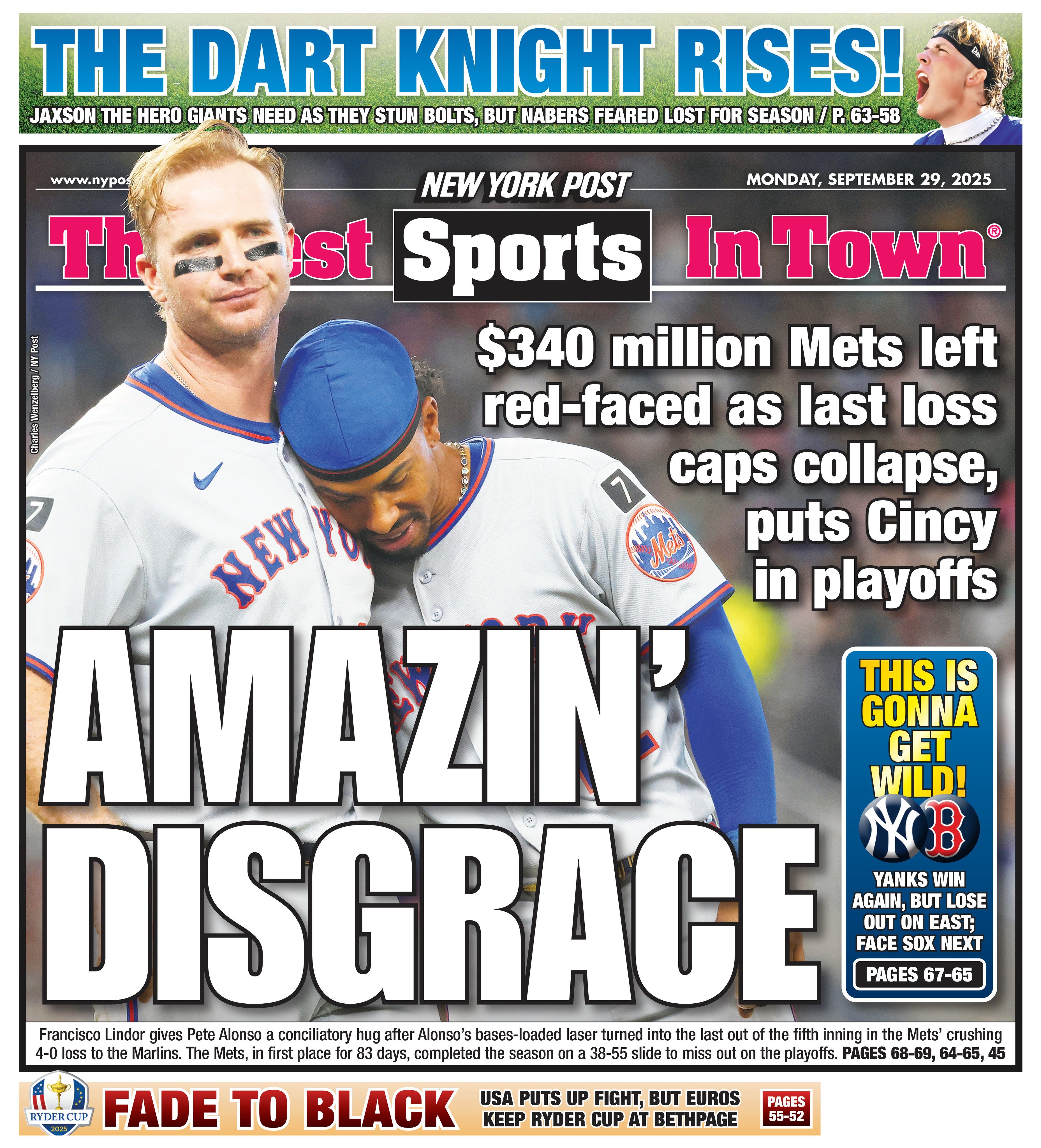
At the end of the Mets appreciably forlorn 2025 campaign, which saw the Mets slowly and heartbreakingly descend to a position in the standings where they would be playoff spectators, Mets President of Baseball Operations David Stearns mentioned in his post-mortem remarks that the Mets needed to improve their “run prevention” or to translate for the less erudite: Pitching & Defense.
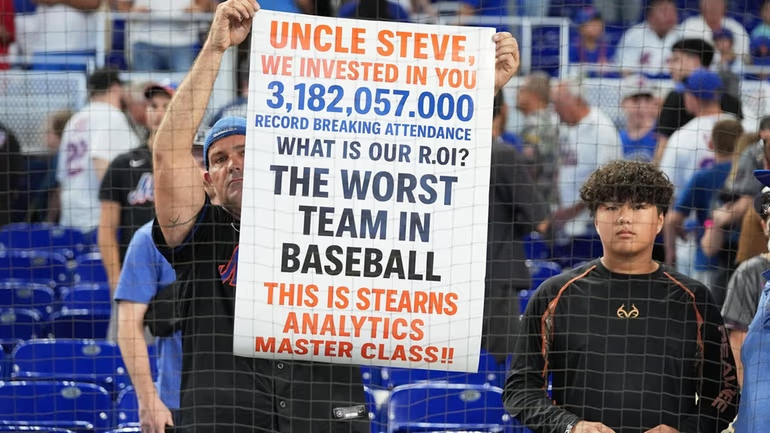
At the age of 40, the Harvard-educated David Stearns has been labeled a baseball savant. Possessing a seemingly uncanny ability to sift through the reports of promising young talents and the flotsam and jetsam of journeymen pitchers, Stearns was able to construct a consistently competitive group with the Milwaukee Brewers. Enticed by the financial largesse of the deep-pocketed Steve Cohen, Stearns returned to his New York City roots to run his childhood team, the New York Mets.
It makes you a little verklempt. It’s a nice story.
But when I heard Stearns illustrate that the Mets need to improve in the area of run prevention, I did a double-take. El Presidente, you’re the baseball guru that assembled a 2025 roster that featured suspect starting pitching and a major league roster that had three players ( Brett Baty, Mark Vientos and Ronny Mauricio.), who share very similar skill sets. Mets manager Carlos Mendoza was handed a roster that had very little positional flexibilty and directly influnced the Mets’ efforts at run prevention.
The Mets headed into 2025 with a starting pitching staff composed of these mostly off-Broadway performers:
Sean Manaea
Kodai Senga
David Peterson
Clay Holmes
Griffin Canning
Tylor Megill
Frankie Montas
Paul Blackburn
There was no way anyone thought this collection of pitchers was going to be capable of positioning the Mets as an elite team, but for the first two months of the season, the quintet of Senga, Peterson, Holmes, Canning and Megill did exactly that. They struggled to go deep into games, which eventually decimated the effectiveness and health of the Mets’ bullpen arms, but this ragtag and ever-evolving roll call of starting pitchers worked until it unraveled and became a weight that slowly dragged the Mets out of the playoff picture and into the abyss.
Stearns assembled this group. He had to understand the chance he was taking with this group. If your desire is to win the World Series, this group was never going to achieve that. Did the analytics and forecasting models remotely suggest that this collection of arms was somehow going to supersede the run prevention constructs of the Los Angeles Dodgers and Philadelphia Phillies? Both of these NL rivals headed into the 2025 season with a collection of arms superior to the Mets.
Stearns chose to enter the season with a starting pitching staff riddled with question marks. He was taking a gamble and that gamble failed miserably.
So, that’s the first part of the run prevention saga of the 2025 Mets. Now, here’s where the run prevention problem of 2025 could possibly further impact the Mets in 2026.
Sifting through Stearns’ run prevention comments, some observers have taken it as a possible sign that the Mets may be reluctant to re-sign Pete Alonso because of his defensive inadequacies. The Polar Bear is adept at picking errant throws out of the dirt, but Alonso has limited range and has a little bit of Steve Sax in him when he is asked to throw the ball. For the 2025 season, Alonso ranked 30 of 30 in defensive runs saved among first basemen and 29 of 30 in Statcast’s outs above average and fielding run value. Alonso’s defensive inadequacies should be mitigated by the fact that Alonso possesses a potent bat (.272/.347/.524), posts up every day — EVERY DAMN DAY — and has shown the ability to excel in New York.
The run prevention issue facing David Stearns is real. The Mets need to improve their starting pitching, the Mets may lose lights out closer Edwin Diaz to free agency, and the Mets starting lineup is littered with subpar defenders such as corner outfielders Juan Soto and Brandon Nimmo.
David Stearns has a mess on his hands, but the run prevention problem is not going to be solved by seeing Pete Alonso play elsewhere in 2026. However, it appears it may involve Brandon Nimmo or Jeff McNeil playing elsewhere in 2026.
The 2026 Mets are not going to look like the 2025 Mets.
 toughdsheridan